
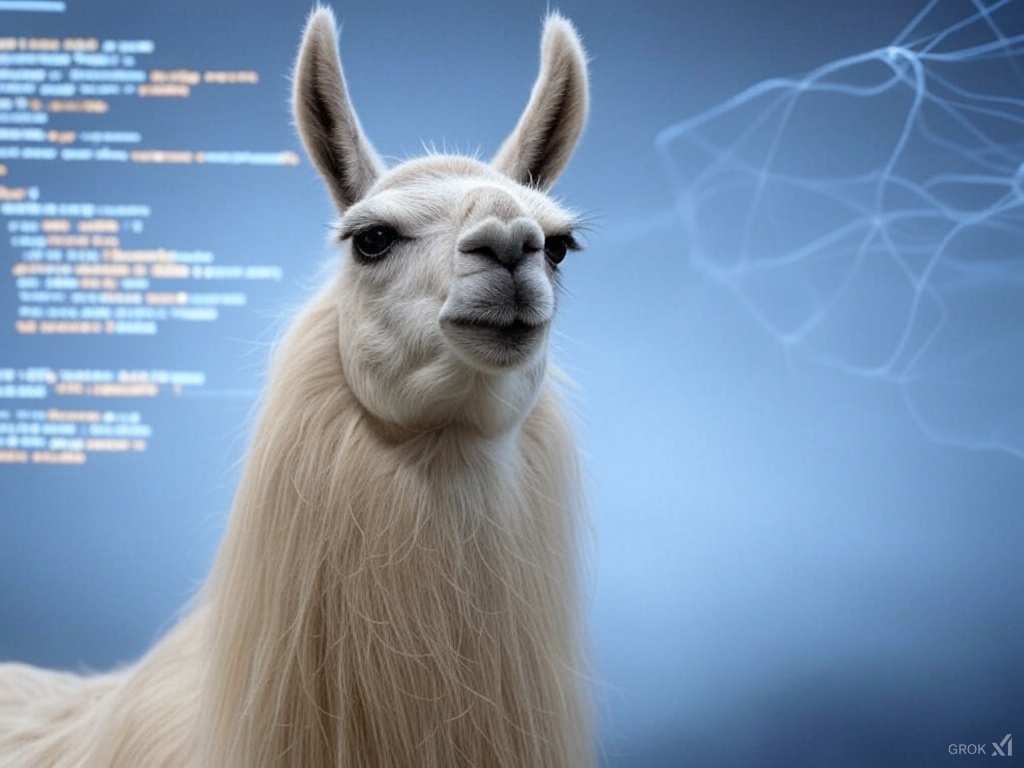
It seems like you’re asking about “LLaMA,” the AI model family from Meta AI, rather than the animal! I’ll assume that’s what you mean—let me know if I got it wrong.
LLaMA (Large Language Model Meta AI) is doing quite well in the world of open-source AI! The family has evolved significantly since its debut in February 2023. The latest version, Llama 3.3, dropped in December 2024, and it’s a beast—ranging from 1 billion to 405 billion parameters. Meta’s been pushing the envelope with these models, making them available under licenses that allow both research and some commercial use, which has sparked a ton of excitement and adoption.
The standout is Llama 3.1, released in July 2024, with its massive 405 billion parameter model—it’s the largest open-source AI model to date. It’s been praised for rivaling top-tier closed models like GPT-4 and Claude 3.5 in tasks like reasoning, coding, and multilingual processing, all while being freely accessible. Developers love it because they can fine-tune it, run it locally, or deploy it on cloud platforms like AWS or Azure. It’s got a 128,000-token context window (that’s about 96,000 words!), making it a powerhouse for handling long conversations or complex documents. Plus, it’s cost-efficient—Meta claims it runs at about half the cost of something like GPT-4o.
The community around Llama is thriving too. By August 2024, Llama models had racked up nearly 350 million downloads, with 20 million in July alone. There are over 60,000 derivative models on platforms like Hugging Face, showing how much people are building on it. Big names like Accenture and AT&T are using it for things like ESG reporting and operational streamlining, which speaks to its real-world impact.
That said, it’s not perfect. While Meta calls it “open source,” some argue it’s more “open approach” than true open source because of licensing restrictions—like needing approval for companies with over 700 million users and an acceptable use policy that bans certain applications. The training data’s also a bit of a mystery, which raises eyebrows about transparency. Still, its performance and accessibility keep it at the forefront of the open-source AI scene.
How’s it doing today, February 25, 2025? Well, it’s still a major player, with ongoing buzz about its capabilities and potential. The AI landscape moves fast, but Llama’s holding its own as a go-to for anyone wanting a robust, customizable AI engine without the proprietary lock-in. What do you think about using it for something specific?
